In this article, Rodolpho Tudor, Senior Network Engineer at Arctic Stream, explains in simple terms what Cortex XDR, XSOAR and XSIAM are and how these Palo Alto Networks solutions help security teams detect threats faster, automate incident response and manage security operations more efficiently. Through simple examples and easy-to-follow analogies, the article clarifies the role of each solution and the differences between them.

Why these solutions are needed
Imagine a large shopping mall with hundreds of surveillance cameras. A few security guards cannot watch all the screens at the same time. Alarms go off continuously and most of them are false. If a real thief appears, they can get lost among dozens of pointless alarms. The cybersecurity of a modern company looks the same: there are hundreds or thousands of computers, plus the network and cloud services, and all of them generate waves of alerts. This picture creates three concrete situations. The first is that there are too many alerts and the security team cannot check all of them, so real threats hide in the noise. The second is that each security product has its own screen and people jump from one application to another, waste time and lose sight of priorities. The third is that attackers have become fast, make intensive use of AI and can steal data within a few hours, so the team needs help to keep up. These problems cannot be solved simply by hiring more people. Smarter tools are needed, tools that filter out the noise, connect the clues and take over repetitive work. This is exactly what the solutions in the Palo Alto Networks Cortex family do, as we explain below.
Three names, three roles
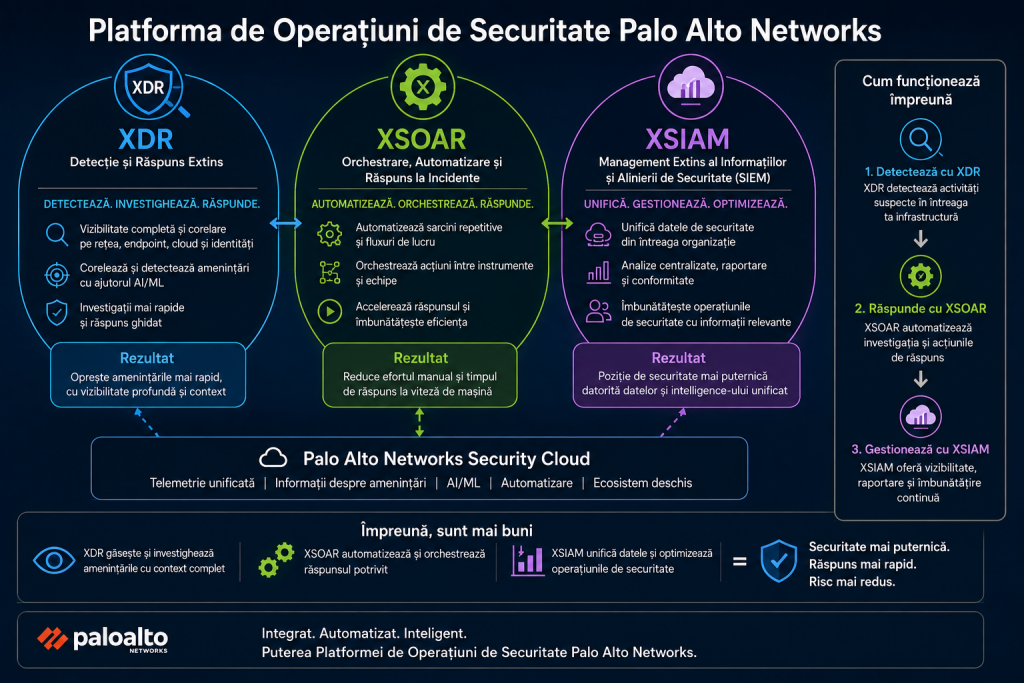
The three solutions have technical names that sound complicated, but the idea behind each of them is simple. The table below summarizes them and in the following sections we explain each one with examples.
| Name | What it means, in short | Role, in one sentence |
| Cortex XDR | Extended detection and response (meaning not only on computers, but also across the network and in the cloud). | The detective that looks for threats everywhere and connects the clues into one clear story. |
| Cortex XSOAR | Automation and orchestration of incident response. | The assistant that takes over repetitive work by following predefined recipes. |
| Cortex XSIAM | A complete security platform powered by artificial intelligence. | The single command center that brings everything together and works almost on its own. |
In short, XDR finds the problems, XSOAR handles their automated resolution, while XSIAM is the platform that brings both together and adds SIEM and artificial intelligence capabilities.
Cortex XDR: the detective that connects the clues
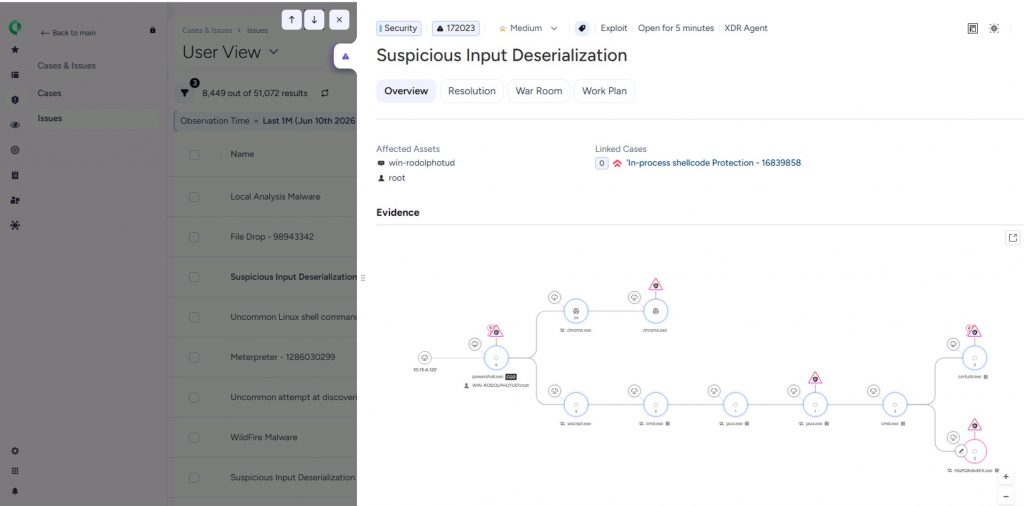
A traditional antivirus protects each computer separately, like a lock placed on each door. The problem is that today’s attacks do not stay at a single door: they start on one computer, spread across the network and then reach the cloud. If each guard sees only their own door, no one sees the break-in as a whole. This is where XDR comes in. The name stands for extended detection and response and in simple terms it is a system that looks for threats not only on computers, but also across the network and in the cloud and automatically connects the pieces into one clear story. Instead of receiving a pile of unrelated notes, you receive an explanation of what happened, step by step.
What it does for you in practice:
- It blocks threats on computers, both known and new ones, including viruses, ransomware attacks and attacks that do not typically use files.
- Instead of hundreds of separate alerts, it brings them together into a few clear incidents, each showing the complete story of the attack.
- It shows where the problem started and how it spread, so the team can resolve it much faster. Palo Alto Networks says this can reduce investigation time by up to 90%.
- It enables an immediate response: isolating an affected computer or stopping a malicious program, all from a single screen.
A simple example: an employee opens a malicious email attachment. XDR notices that the file is behaving strangely, links it to a suspicious network connection, brings everything together into a single incident and shows the team the entire chain, so they can stop the attack quickly before it spreads.
Cortex XSOAR: the assistant that handles routine work
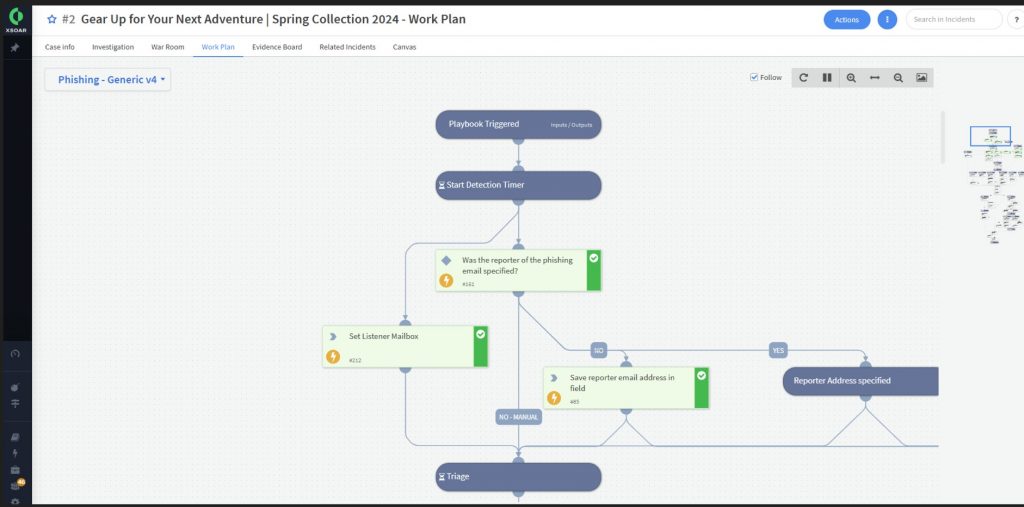
When a threat appears, the team always goes through the same steps: it checks the alert, looks up whether a certain address is dangerous, opens a ticket, notifies someone and blocks the threat. When done manually dozens of times a day, these operations are slow and tiring and mistakes can slip in when people are in a hurry. XSOAR is designed precisely for these situations. The name refers to the automation and orchestration of response and in simple terms it is a tool that automatically carries out these repetitive steps by following predefined recipes. These recipes are called playbooks and are built visually, as if you were drawing a diagram, without having to write code.
What it does for you in practice:
- It takes over repetitive tasks so people can focus on the real problems.
- It responds within minutes instead of hours.
- It performs tasks consistently every time, without variations from one person to another.
- It keeps people in control when sensitive decisions are involved.
- It comes with hundreds of connectors to other products, so it fits with what you already use.
A simple example: one morning, the team finds forty alerts about suspicious emails. Instead of checking them one by one, an XSOAR playbook takes each email, automatically checks whether the sender is dangerous, deletes the message from affected inboxes when necessary and leaves the team only the unclear cases that genuinely need human attention. What used to take several hours is resolved in a few minutes.
Cortex XSIAM: the single command center, powered by AI
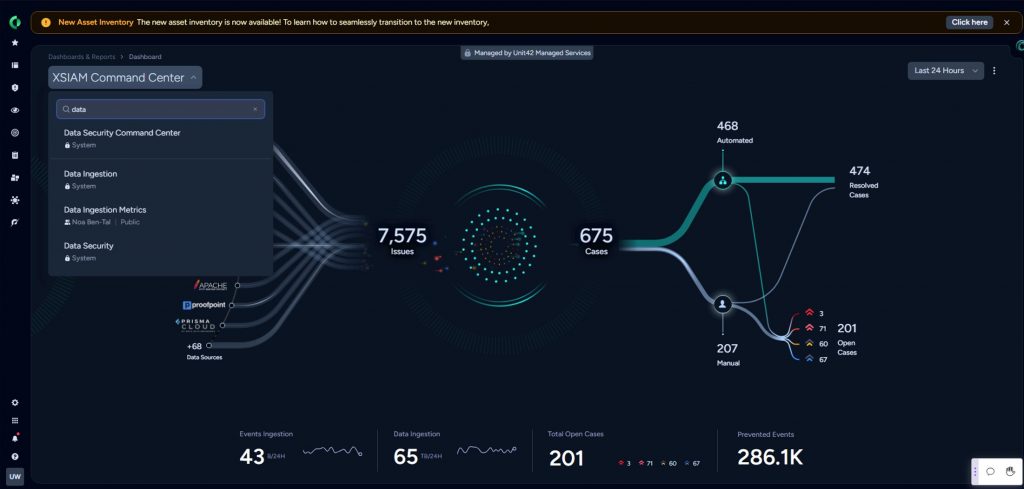
So far, we have described two separate helpers: the detective and the assistant. XSIAM is the bigger idea: it brings everything into a single intelligent platform and lets artificial intelligence do most of the heavy lifting. The name refers to a complete security platform powered by artificial intelligence. In simple terms, it is a single platform that combines the detective (XDR), the assistant (XSOAR), the large system of record (called SIEM) and other functions and uses artificial intelligence to handle security work almost on its own. To keep it simple, a SIEM is the system that collects and stores all records of what happened, so you can search them later and demonstrate compliance. XSIAM includes this role as well.
What it does for you in practice:
- It automatically gathers information from all areas and connects it.
- It uses artificial intelligence to significantly reduce noise. Palo Alto Networks says that the number of alerts that need to be reviewed can drop by up to 99%.
- It recognizes routine incidents and resolves them automatically.
- It has artificial intelligence agents that can investigate and respond at machine speed, under human supervision.
- It reduces manual work. Palo Alto Networks says it can reduce it by up to 75%.
A simple example that is often used: an employee’s account suddenly starts logging in at midnight from another country and opening files it does not normally access. XSIAM automatically connects these signs, recognizes that the situation is suspicious, raises a high-priority alert and can automatically block the account while also requesting human confirmation. Without such a platform, the signs would have remained scattered across different places and might have gone unnoticed.
Benefits for the company and its people
For the company
- Fewer blind spots: threats from across the environment are captured on a single screen.
- Faster response: less time passes between “something is wrong” and “we have resolved it,” which limits the damage.
For the people on the security team
- Fewer false alerts, so they can focus on what matters.
- One screen instead of several, so they no longer have to jump from one tool to another.
- Boring and repetitive work is taken over by automation.
- An artificial intelligence assistant they can ask questions in everyday language, which will also help newer colleagues.
- Less burnout, because the tools will take over a larger share of the tasks.
Natural questions about these solutions
Here are a few questions that someone hearing about these products for the first time would naturally ask, with short answers.
Is it the same thing as antivirus?
No. An antivirus protects a single computer and mainly looks at files. These solutions track threats across the entire environment, meaning on computers, across the network and in the cloud, connect the clues and can also automate the response. An antivirus is one piece; these solutions are the system that sees the whole picture.
Does artificial intelligence replace people?
No. Its role is to take over routine work and filter out the noise, so people can focus on important decisions. For sensitive actions, the system asks for confirmation from a person. In practice, it makes the team’s work easier rather than eliminating it, and it is especially helpful for newer colleagues.
Do I need to buy all three?
Not necessarily. They build on one another. You can start with XDR, add XSOAR for automation, while XSIAM is the integrated option for those who want everything in a single platform. What you choose depends on your needs and budget.
How difficult is it to use?
Day-to-day work becomes simpler because everything is on one screen and there is an assistant you can ask questions in everyday language. On the other hand, the initial installation and fine-tuning require an experienced team, which is why a trial period in your own environment can be very helpful before making a decision.
Who needs these solutions?
Any organization with enough computers and data that a single person can no longer monitor everything manually. The larger and more varied the environment, the clearer the benefit. Small companies can start with a single component, while larger companies, or providers that manage security for multiple clients, can use the complete platform.
Conclusion
In short, the three solutions complement one another. Cortex XDR finds threats and connects the clues into a clear story. Cortex XSOAR automates the resolution by following predefined recipes. Cortex XSIAM brings both together, along with the rest, in a single platform powered by artificial intelligence. Together, they help a company see more, respond faster and spend less, while also making the security team’s day-to-day work easier.
For more information about Palo Alto Networks solutions and how they can be integrated into your organization’s infrastructure, please contact us at [email protected].
Essential terms explained briefly
- XDR: the system that looks for threats on computers, across the network and in the cloud and connects all the clues into one clear story.
- XSOAR: the tool that automates repetitive response steps by following predefined recipes.
- XSIAM: the single platform, powered by artificial intelligence, that brings everything together.
- SIEM: the system that collects and stores all security records so you can search them later.
- Ransomware: a malicious program that locks files and demands money to unlock them.
- Playbook: a recipe of steps that the system follows automatically when a particular situation occurs.
References
All sources are official Palo Alto Networks materials.
- Cortex XDR (product page). https://www.paloaltonetworks.com/cortex/cortex-xdr
- Cortex XSOAR (product page). https://www.paloaltonetworks.com/cortex/cortex-xsoar
- Cortex XSIAM (product page). https://www.paloaltonetworks.com/cortex/cortex-xsiam
- What is Cortex XSIAM (Cyberpedia, detailed explanation). https://www.paloaltonetworks.com/cyberpedia/what-is-extended-security-intelligence-and-automation-management-xsiam
- Cortex product family (overview). https://www.paloaltonetworks.com/cortex
Note: this material is intended as a general overview. Exact names and features may vary depending on the version and license, and for a purchasing decision, an official quote and testing in your own environment are recommended. Palo Alto Networks, Cortex, Cortex XDR, Cortex XSOAR and Cortex XSIAM are trademarks of Palo Alto Networks, Inc.